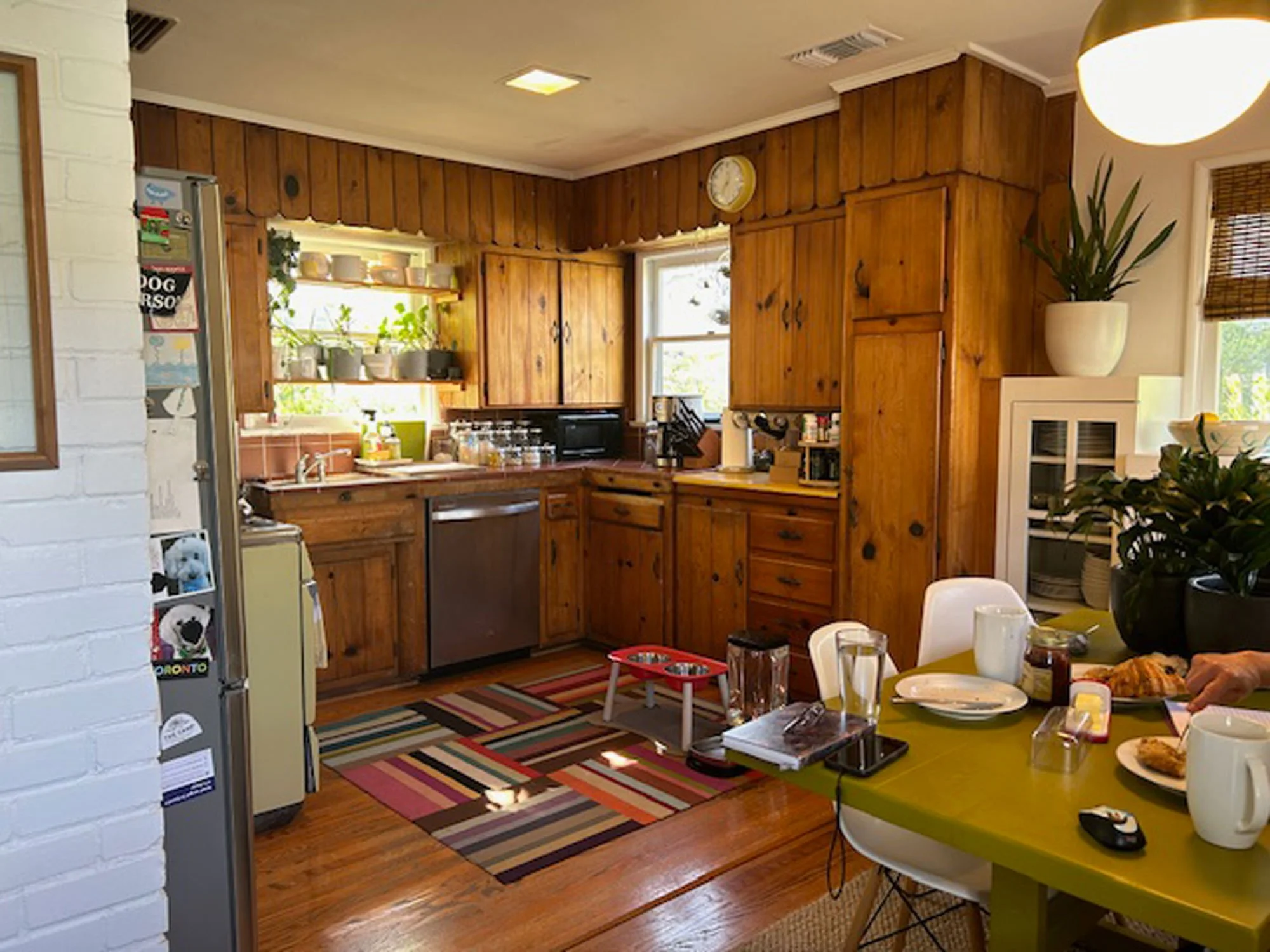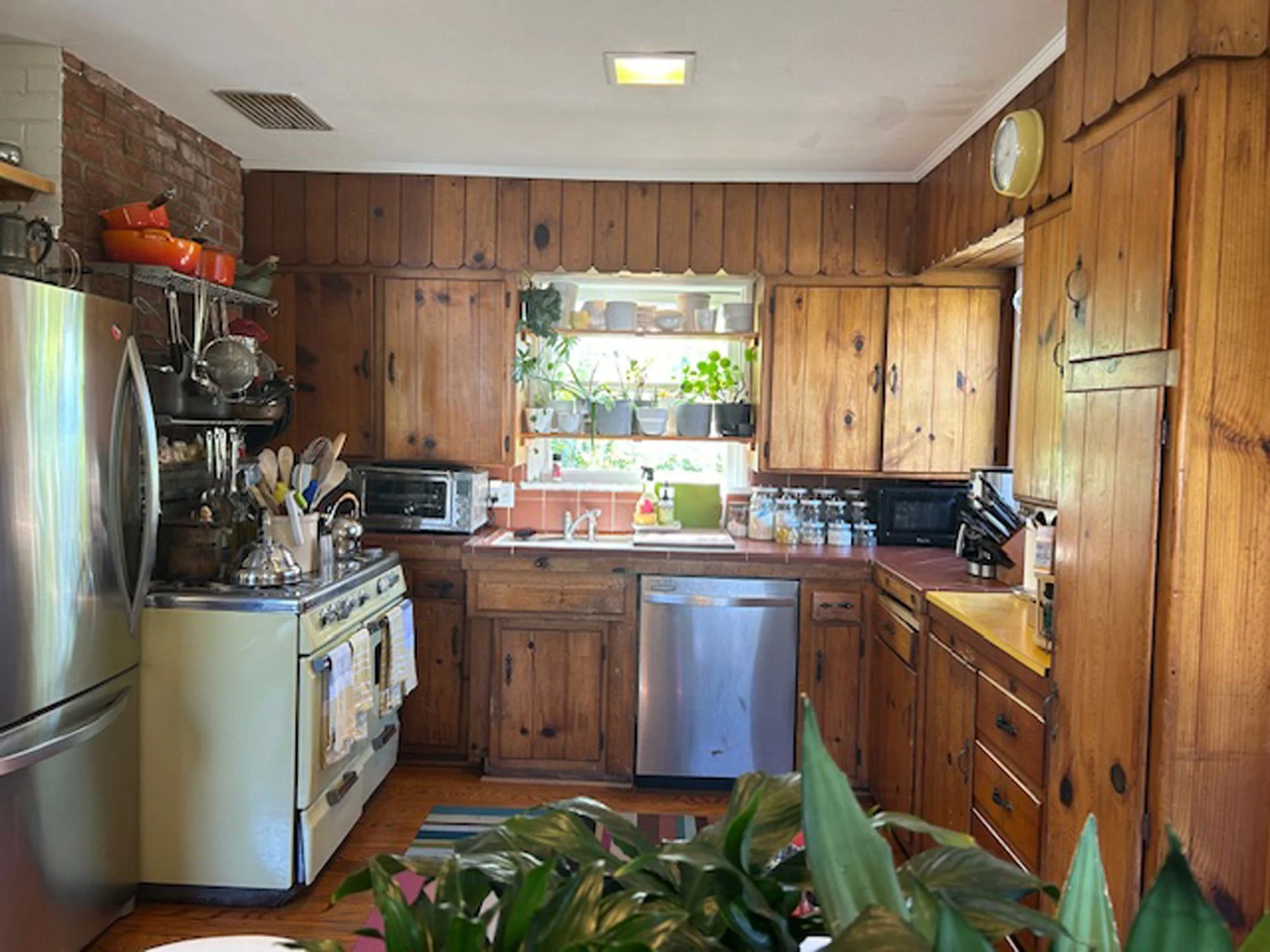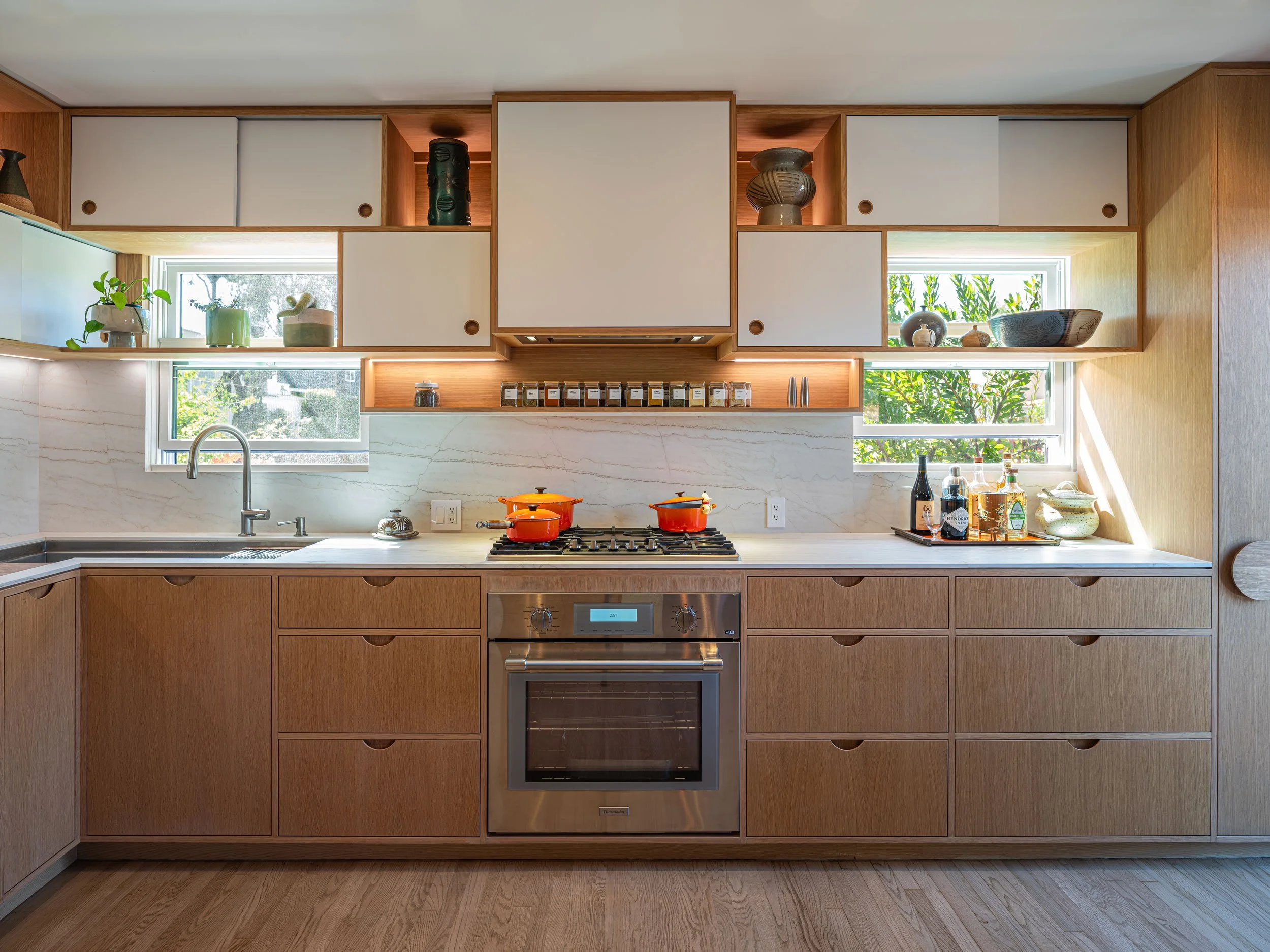
Designed for a former baker, chef, and restaurant owner, this kitchen In Manhattan beach balances function with personal meaning. Existing windows are framed by cabinetry and integrated shelving, turning natural light, garden views, and inherited ceramics into central elements of the composition.
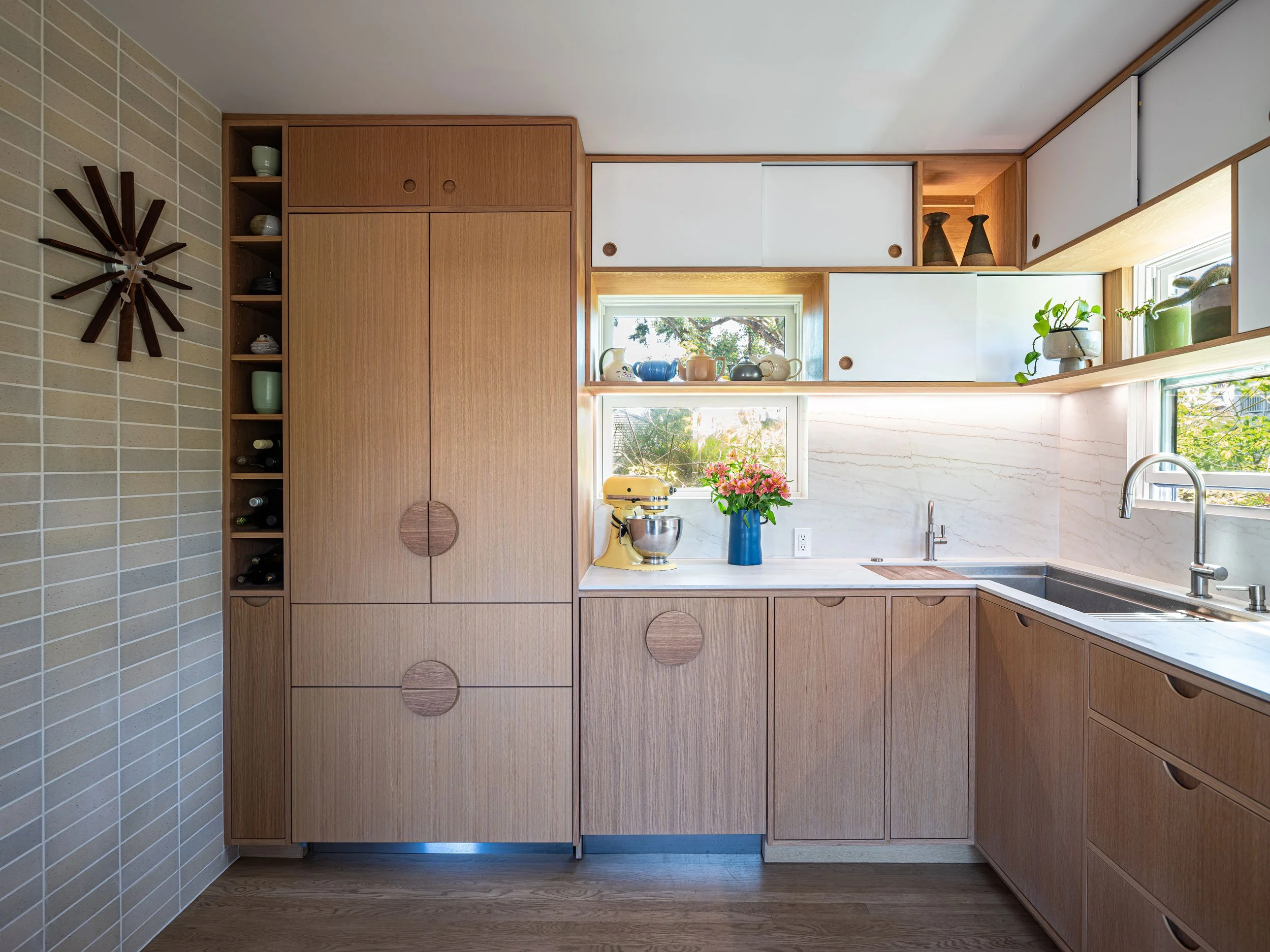
The new millwork increases storage while making the room feel more open. Upper cabinets are composed as a dynamic arrangement of honey oak, white melamine panels, open niches, and integrated lighting.
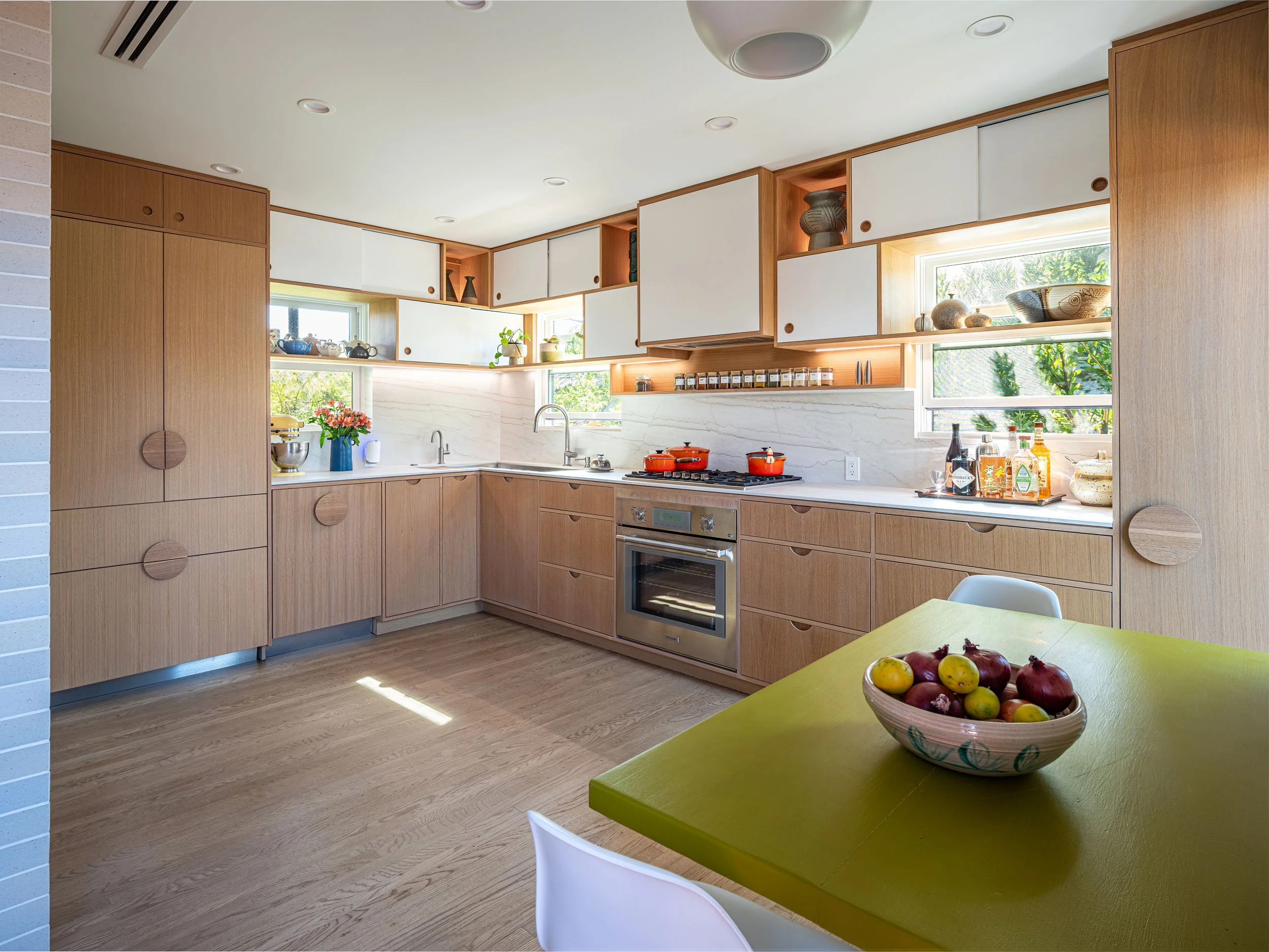
The kitchen layout was reorganized into an efficient L-shaped working sequence. Refrigerator, dishwasher, trash, sink, cooktop, and oven are arranged as a compact assembly line for cooking, cleaning, prep, and baking. A L-shaped workstation sink can be closed off when needed, maximizing uninterrupted counter and cutting space.
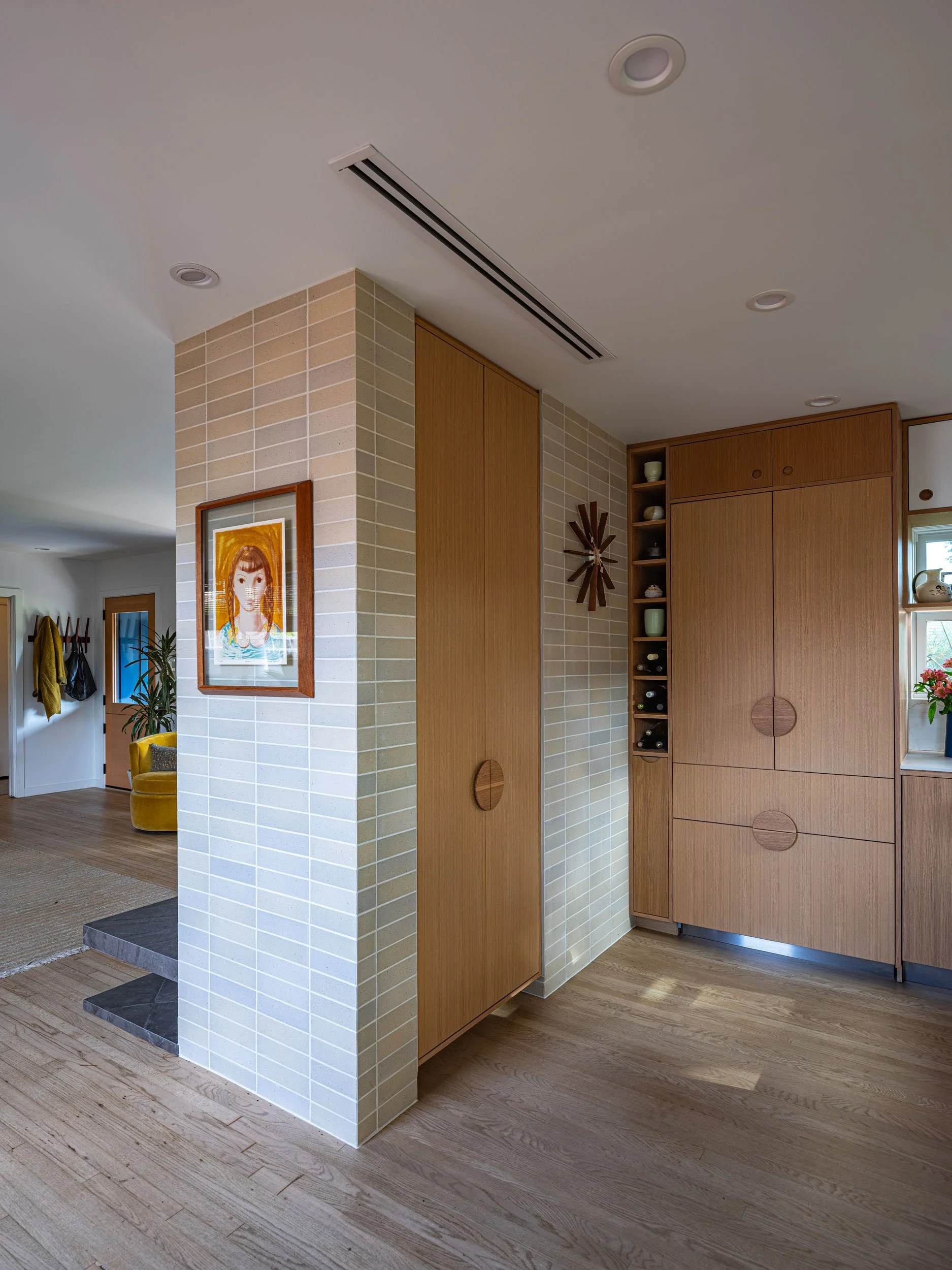
A concealed pantry wall absorbs many of the everyday functions that typically create visual clutter. Coffee makers, a toaster oven, pull-out shelves, and integrated power outlets are hidden within the pantry closet, allowing small appliances to remain accessible but out of view. Dedicated niches for wine bottles and ceramics are integrated into the millwork, allowing storage and display to work together..
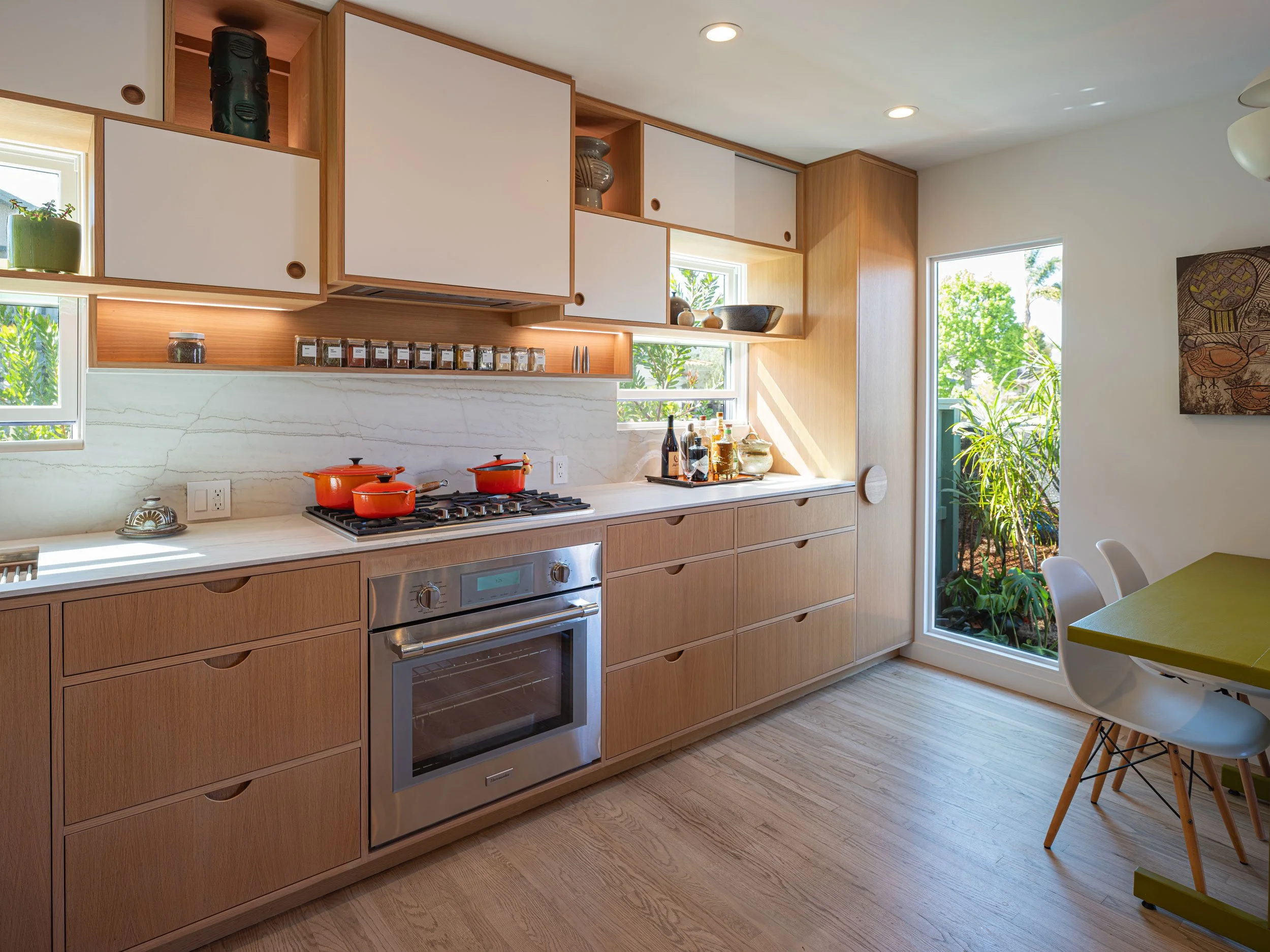
The cabinetry frames the windows and transforms them into illuminated display moments, with integrated shelving for ceramics, plants, spices, and everyday objects. In doing so, the kitchen becomes not only a place for cooking, but also a place for memory, collection, and display.
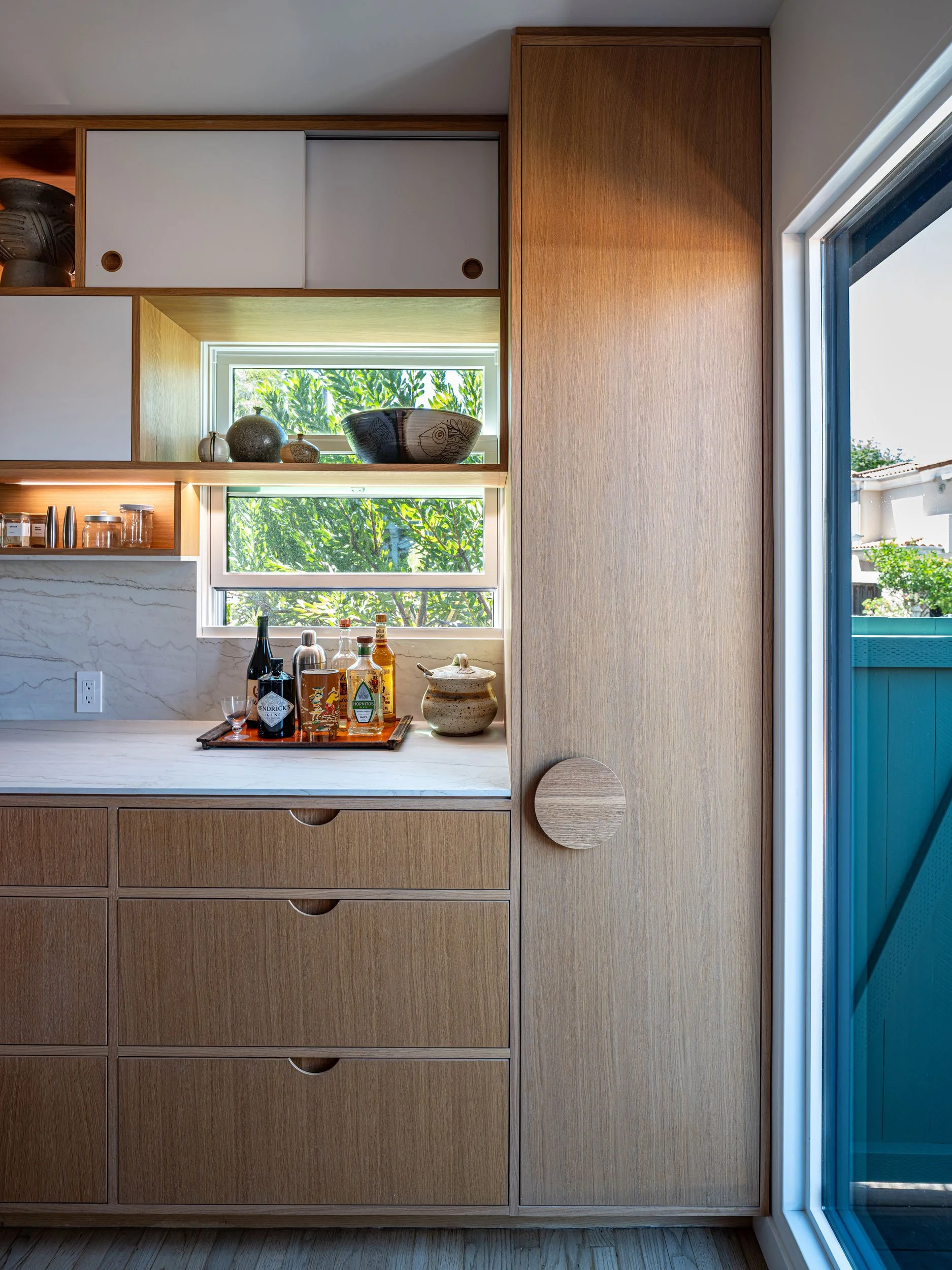
The lower cabinets use integrated pulls to keep the work surfaces clean and quiet. Larger storage and appliance elements — including the refrigerator, dishwasher, pantry, and tall cabinets — are fitted with custom circular pulls. These pulls are both sculptural and ergonomic, giving the hand a natural place to rest and grip while contributing to the overall architectural language of the kitchen.
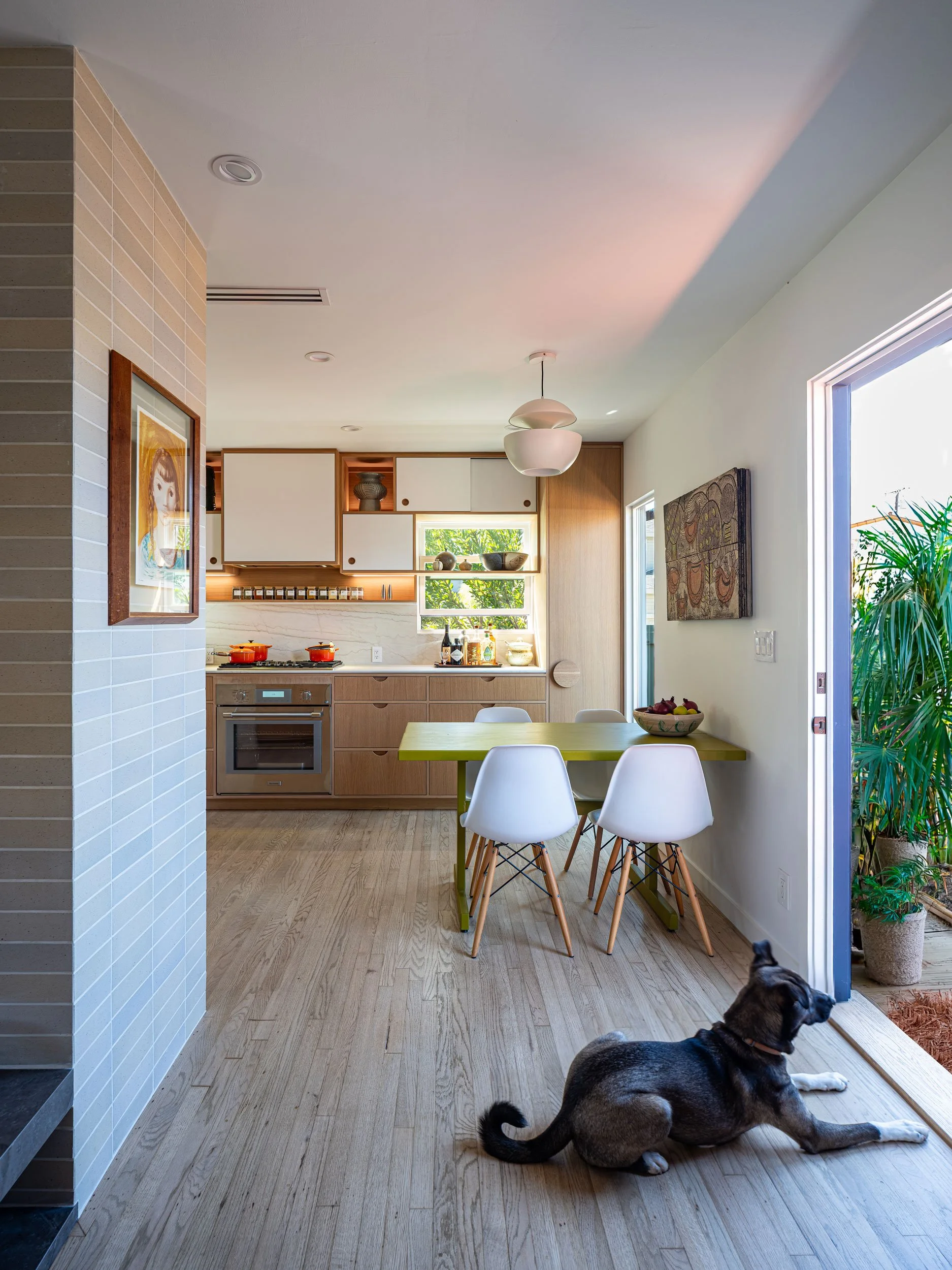
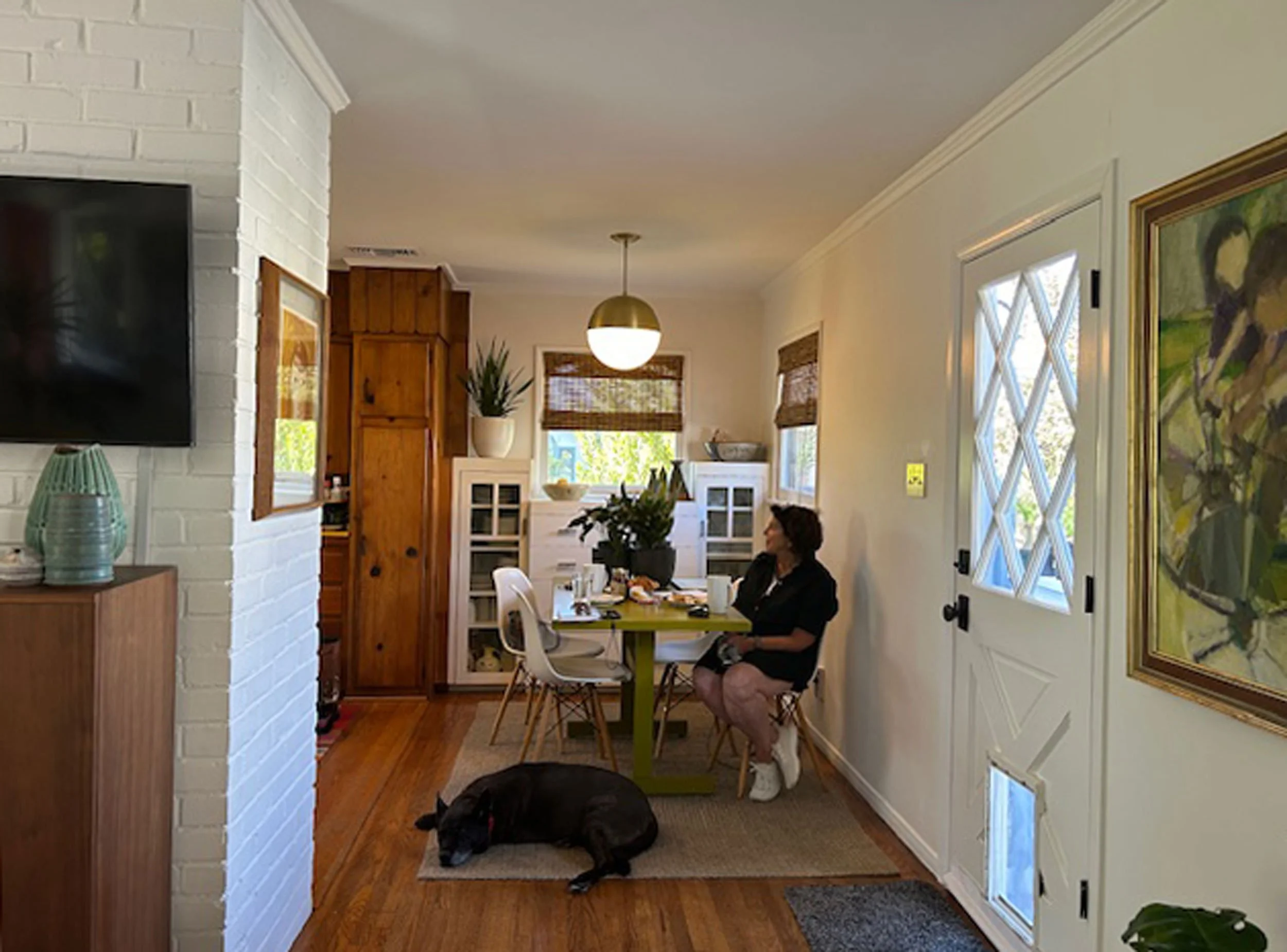
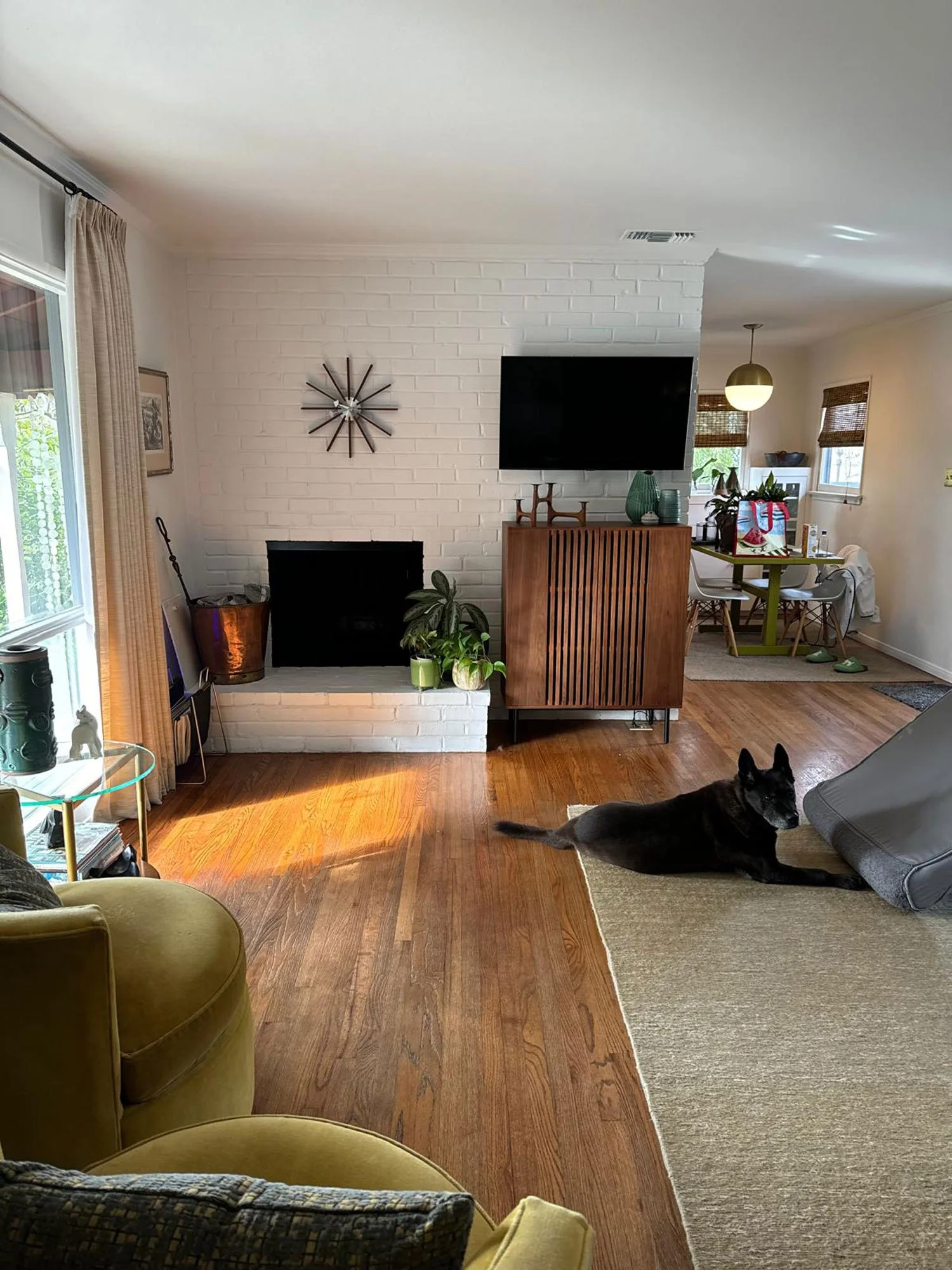
The original oak floors were also preserved, sanded, and lightened. This single move dramatically changes the perception of the home. The lighter floor finish reflects more natural light and creates continuity between the living room, dining area, and kitchen, making the existing footprint feel larger and more connected.
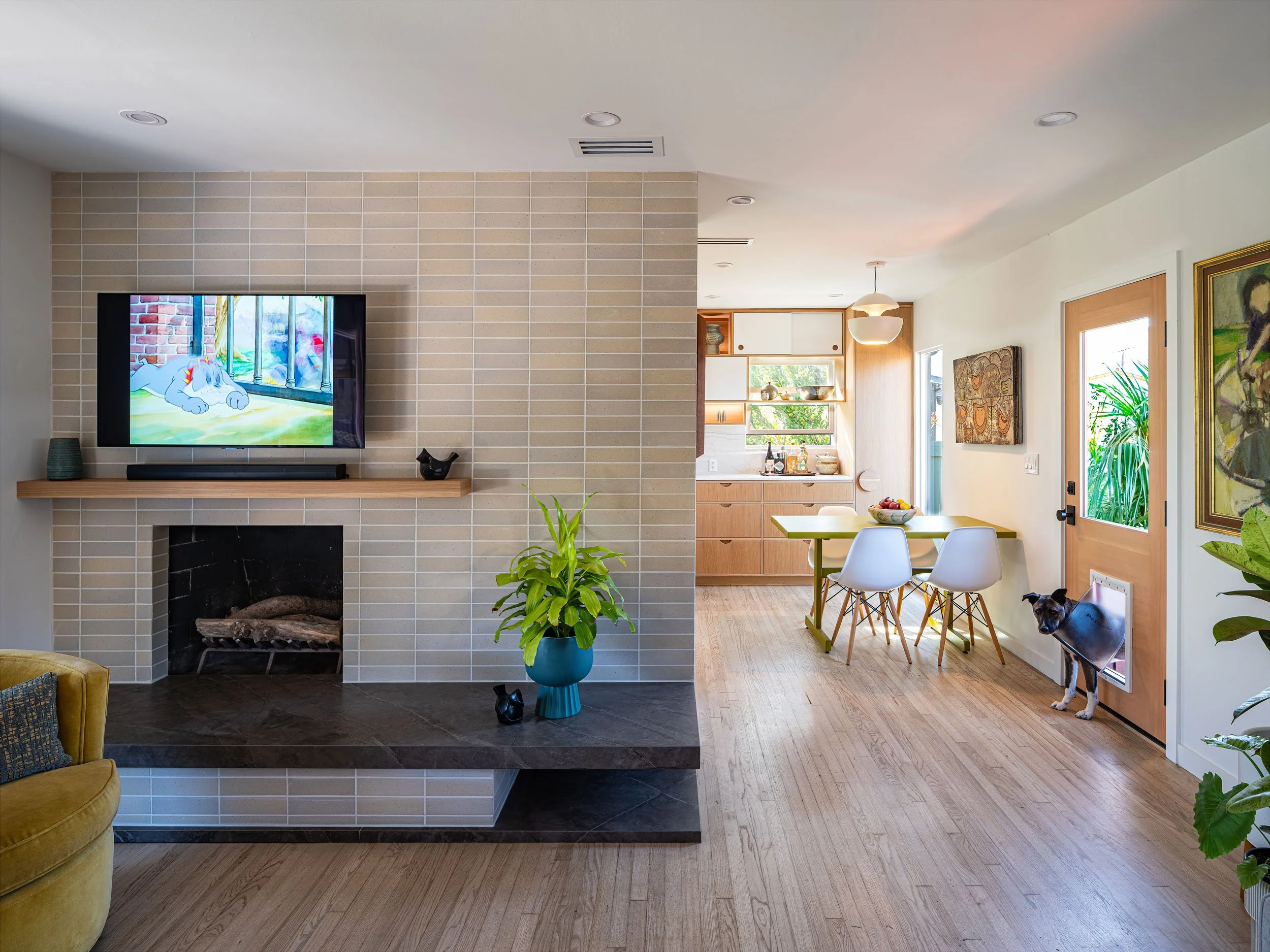
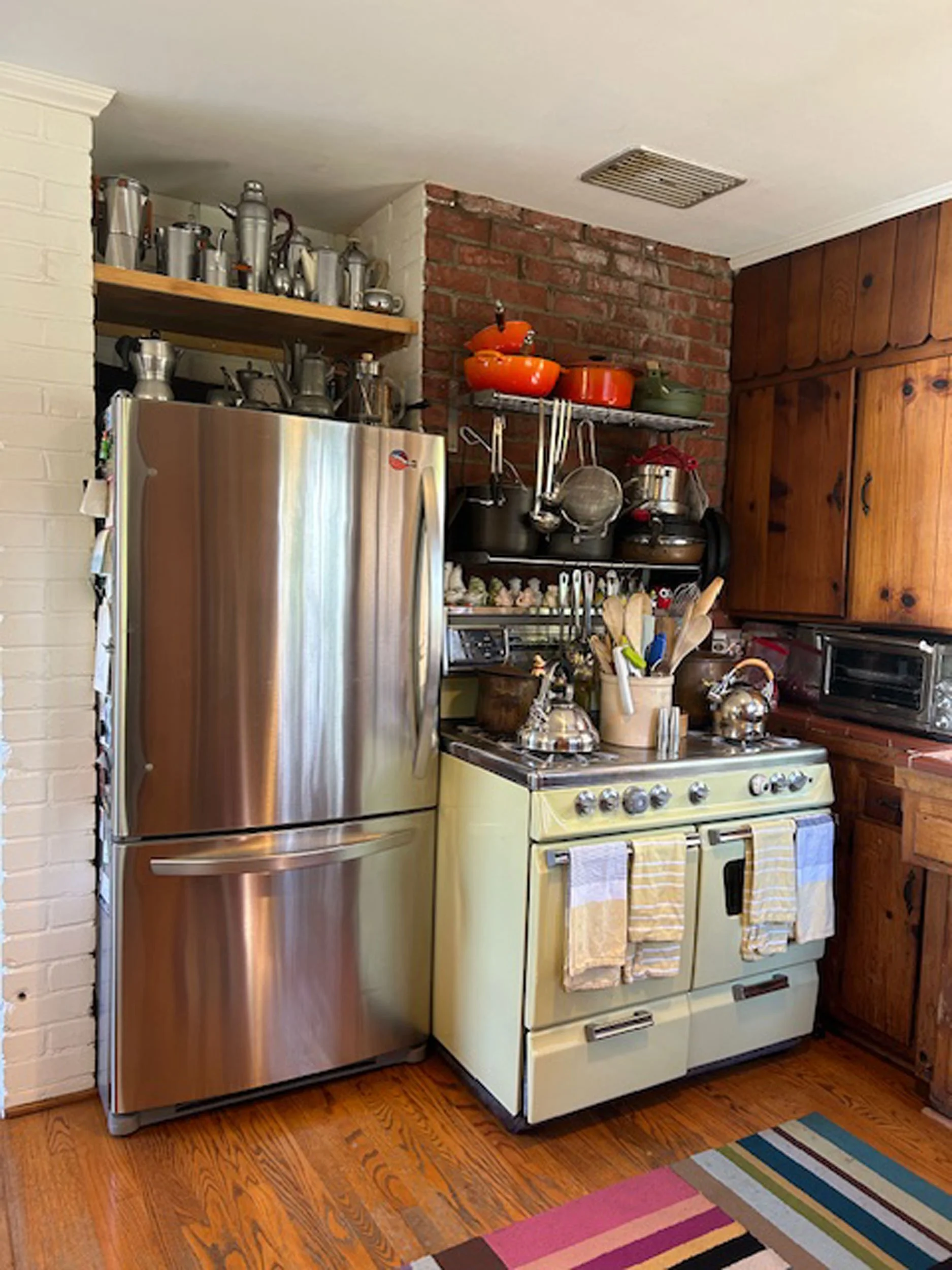
The renovation also reimagines the existing brick fireplace wall, which was worn, aged, and broken at the edges. Rather than removing this central masonry element, the design clarifies and elevates it. The fireplace wall is clad in a Japanese fire-clay tile, transforming it into a refined architectural volume between the living room and kitchen.
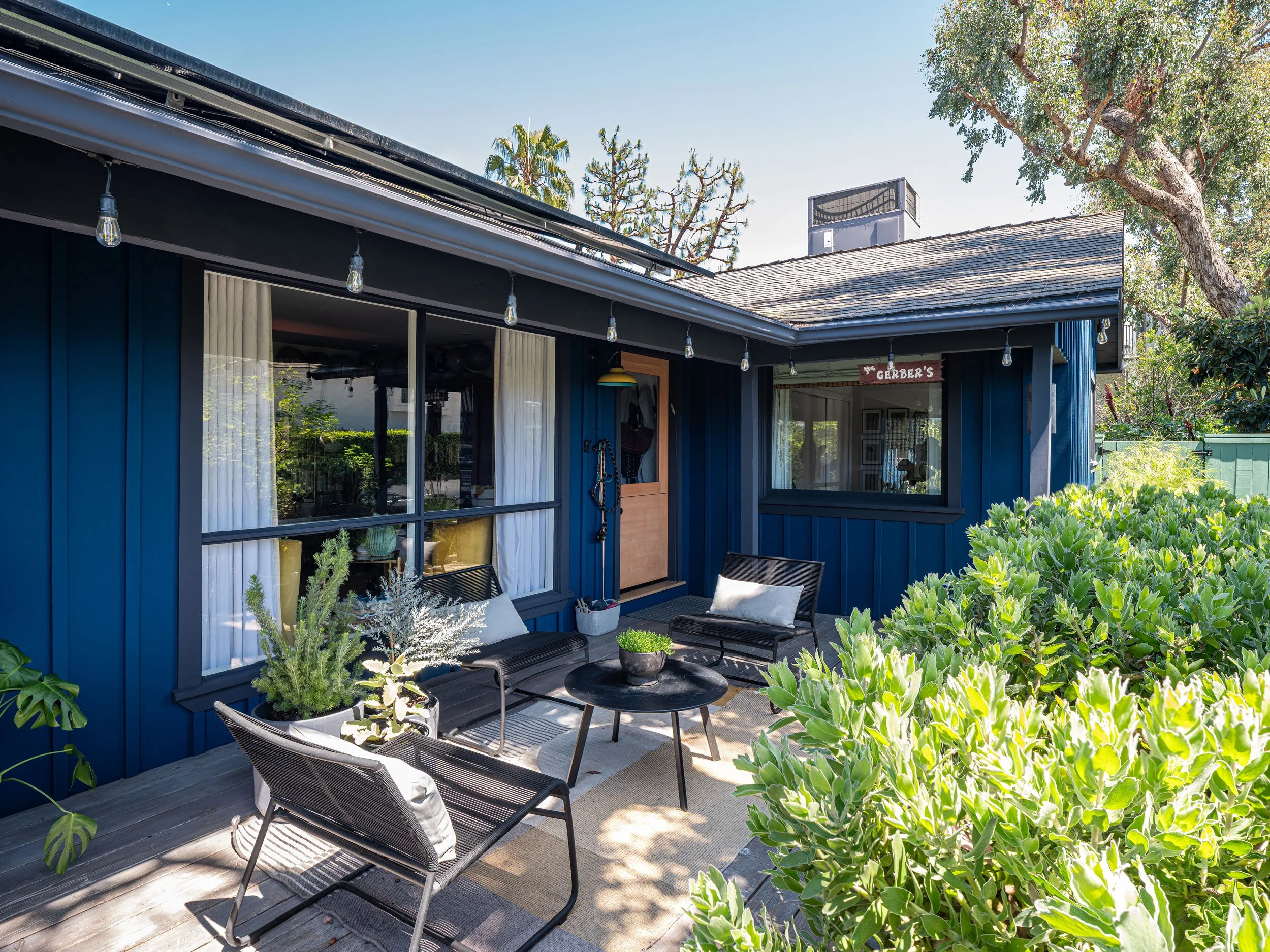
The renovation extended beyond the kitchen to include a restrained exterior refresh of the 1950s Manhattan Beach cottage. By removing decorative trims and clarifying the underlying post-and-beam structure, the design gives the façade a cleaner architectural expression.
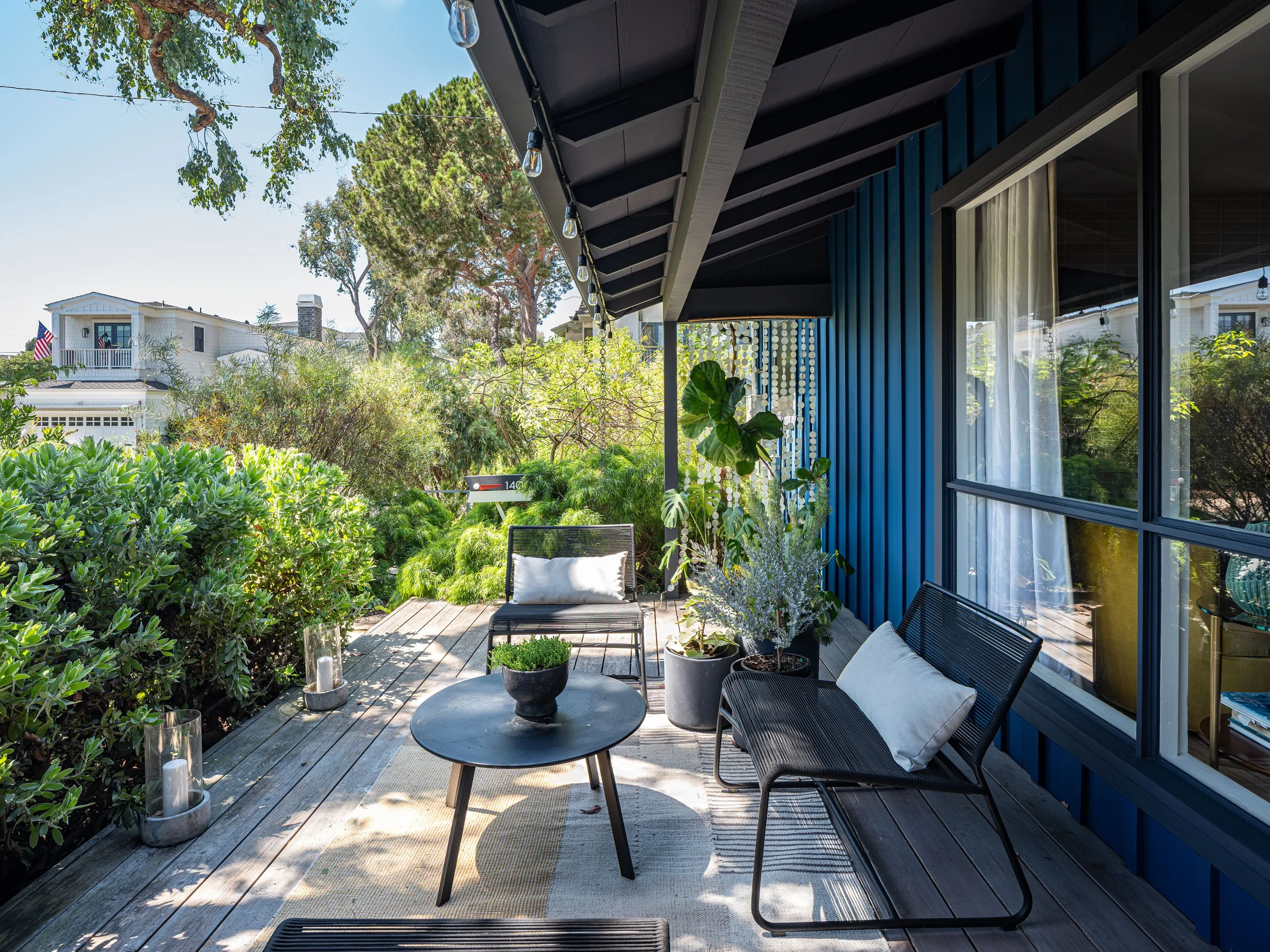
A cooler palette of royal blue and charcoal gray brings depth and contrast to the entry court, transforming the approach to the home into a fresher, more composed, and more contemporary arrival.
Before Images