

The design transforms a century-old assembly hall in a elementary school in Culver City with a co-enrollment model that brings Deaf and Hard of Hearing students together with their hearing peers into a contemporary gathering space while preserving historic murals. The renovation improves acoustics, accessibility, performance capabilities, durability, and flexibility while maintaining the hall’s role as the center of campus life, preserving its historic character and creating a contemporary learning environment.
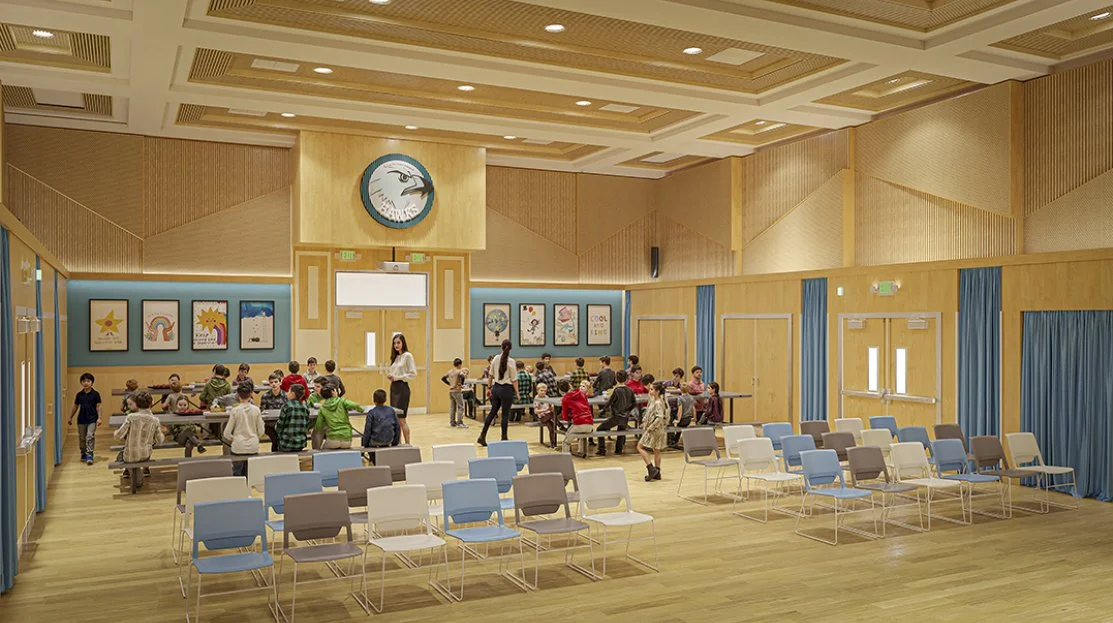
Designed to support the changing needs of the school day, the hall transforms effortlessly from assembly space to dining commons. Concealed side-wall storage accommodates chairs, and tables, enabling rapid reconfiguration while preserving a clean architectural expression. Resilient finishes, integrated student display areas, and a CNC-milled school emblem create a durable and welcoming environment for everyday use.

New resilient finishes respond to the needs of a heavily used school environment. Luxury vinyl flooring, high-pressure laminate wall panels, aluminum trims, and integrated storage creates a durable and welcoming space designed for decades of daily use. The design leverages existing storage closets as hidden acoustic infrastructure, converting them into tuned resonators that contribute to the room’s acoustic performance while preserving storage. Along the side walls, remaining storage is concealed behind acoustic curtains, allowing functional requirements to quietly support the architectural experience.
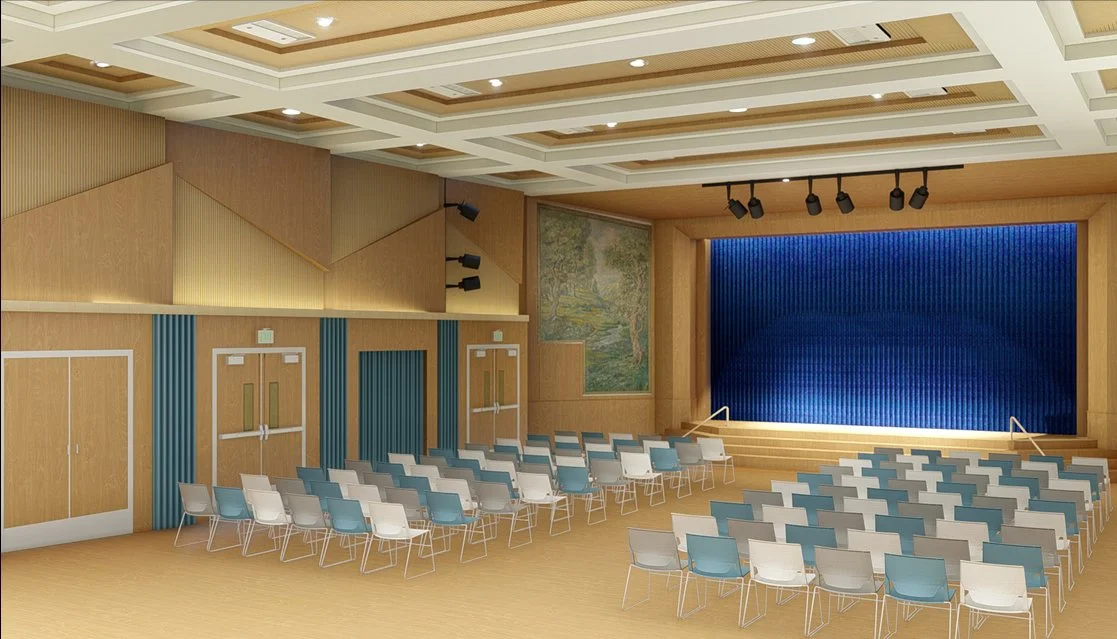
The design approaches acoustics as an issue of educational equity. New acoustic treatments, integrated technology, preserved historic elements, and a reconfigured stage work together to improve speech intelligibility for students using cochlear implants and hearing aids while supporting performances, learning, and communication.
Angled acoustic wall panels redirect sound reflections and reduce slap echo, creating a rhythmic, sound wave-inspired composition. Oak-veneered slats mounted on felt-backed acoustic ceiling panels enhance sound absorption and reduce ambient noise.
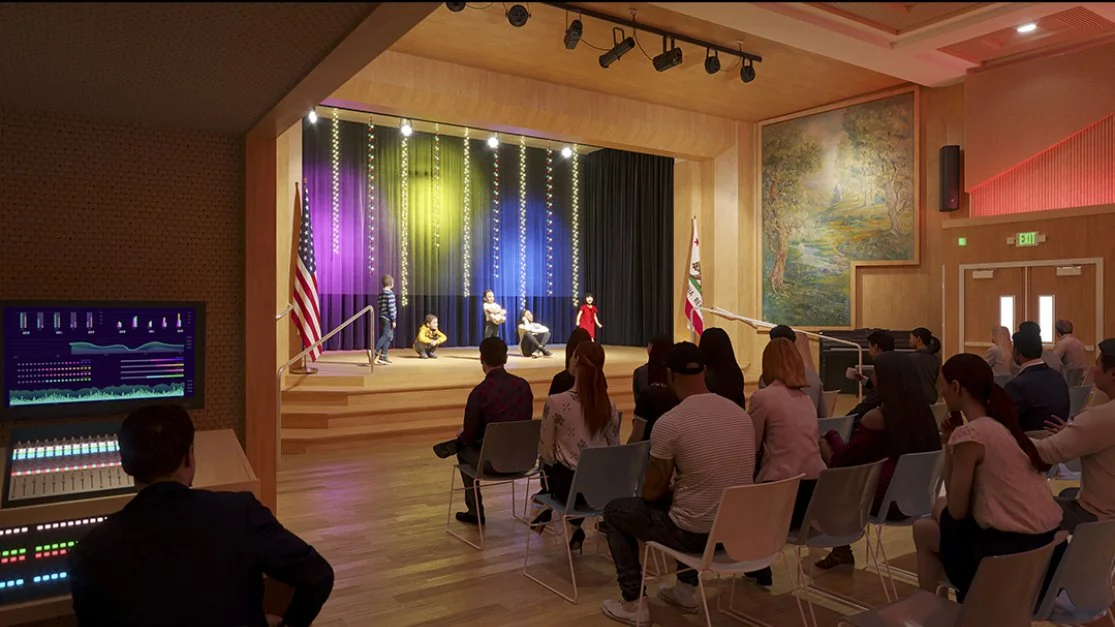
An underutilized storage room is transformed into a dedicated production booth with direct sightlines to the stage. Integrated dmx lighting, audiovisual controls, and smart building technology allow staff to manage lighting, sound, presentations, performances, and events from anywhere within the hall.

The stage was reconfigured as a continuous series of broad treads and risers, creating a more versatile setting for performances, presentations, and school ceremonies. The historic murals, long overshadowed within the space, are restored as the visual heart of the hall. Framed by a reimagined proscenium and warm oak finishes, they connect generations of students to the school’s history
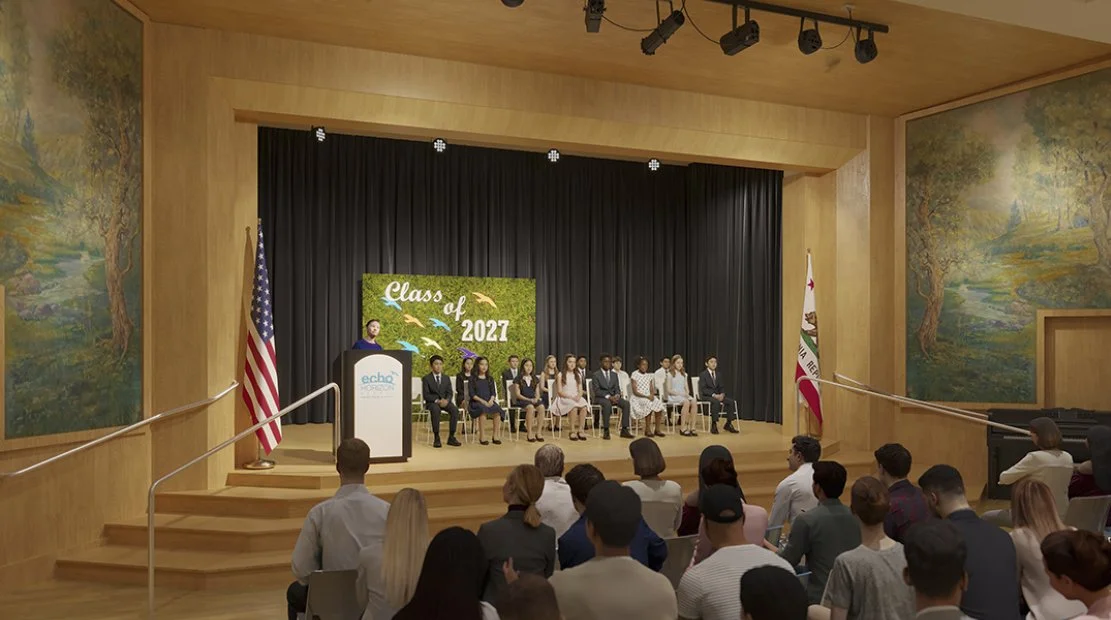
Acoustics, architecture, and technology work together to support communication, learning, and performance. The redesigned hall creates a more inclusive environment where every student has a greater opportunity to listen, participate, perform, and be heard.

Before and After Views

New dmx-controlled lighting and audiovisual systems support a wide range of activities, from school assemblies and presentations to theatrical performances and fundraising events. The hall can easily transition between everyday use and special events. JBL speakers provide even audio throughout the hall, with hidden subwoofers for fuller sound. The system also connects directly to students’ cochlear implants and hearing aids.